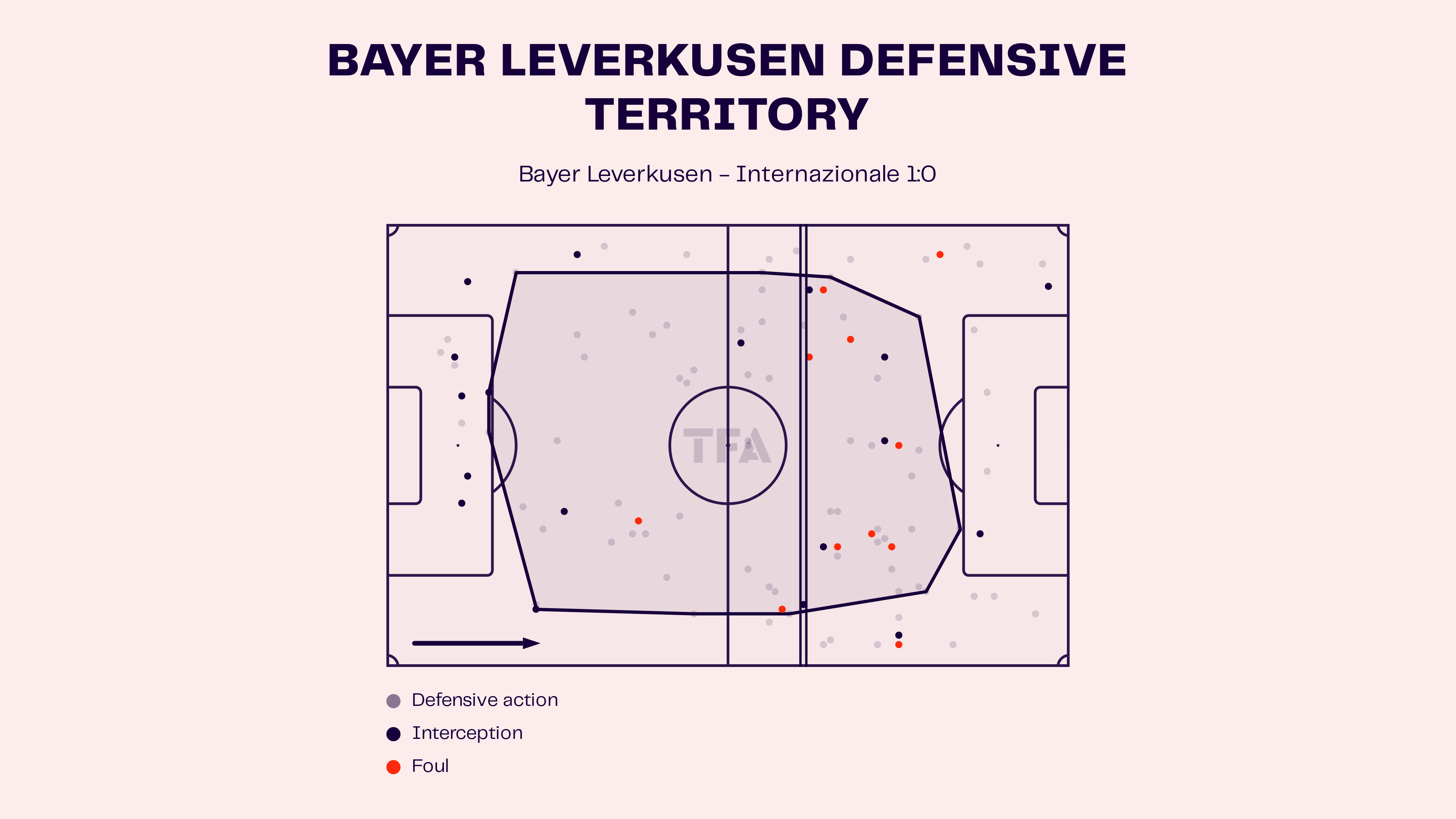

Bayer Leverkusen’s recent victory over Inter Milan, secured by a late Nordi Mukiele goal, was more than just a statement of intent in the Champions League. It was a testament to the team’s newfound defensive solidity under manager Xabi Alonso. While Mukiele grabbed the headlines, the foundation of Leverkusen’s success lies in their transformed defence. This unit has evolved into a formidable force capable of frustrating even the most potent attacks.
Leverkusen’s defensive strength was on full display in the match against Inter. They limited the Italian side to just six shots, only two of which were on target. This defensive masterclass was not a one-off performance but a continuation of a trend that has seen Leverkusen concede just one goal in their last three matches. This remarkable turnaround raises the question: How has Leverkusen, a team previously known for their attacking flair, become a defensive powerhouse?
The Alonso Effect: A Change in Mentality and Tactics
The transformation can be largely attributed to the arrival of Xabi Alonso, a manager renowned for his tactical acumen and emphasis on defensive organization. Alonso, a legendary midfielder during his playing days, has instilled a new level of discipline and tactical awareness in the Leverkusen squad. The team’s defensive structure is now characterized by compact lines, aggressive pressing, and a commitment to winning individual battles.

Alonso’s tactical approach is evident in Leverkusen’s recent performances. The team has adopted a more pragmatic style, prioritizing defensive stability over all-out attack. This shift in mentality has resulted in a more cohesive defensive unit, with players working in unison to close down spaces and deny opponents scoring opportunities.
Alonso’s tactics have played a significant role in Leverkusen’s defensive improvements. For instance, the sources highlight Leverkusen’s ability to limit Inter’s shots, suggesting a disciplined and organized defensive setup.
Individual Brilliance Within a Collective Framework
While Alonso’s tactical guidance has been instrumental, the players’ execution on the pitch deserves equal credit. Leverkusen’s defensive unit has stepped up to the challenge, demonstrating a commitment to the collective cause and a willingness to put in the hard yards.

Key players have emerged as defensive stalwarts. Edmond Tapsoba, the towering Burkina Faso centre-back, has been a rock at the heart of the defence, consistently winning aerial duels and making crucial interceptions. His composure and reading of the game have been vital in organizing the backline. Alongside Tapsoba, Jonathan Tah has rediscovered his best form, providing physical presence and leadership. The German international has formed a formidable partnership with Tapsoba, creating a defensive wall that has been difficult to breach.
Beyond the centre-back pairing, Leverkusen’s defensive solidity is reinforced by the contributions of the full-backs and midfielders. Jeremie Frimpong, while primarily known for his attacking prowess, has displayed commendable defensive discipline, diligently tracking back and making crucial tackles. On the opposite flank, Piero Hincapié has brought energy and tenacity to the left-back position, consistently disrupting opposition attacks.

In midfield, Exequiel Palacios has emerged as a key figure in shielding the defence. The Argentine’s positional awareness, tackling ability, and distribution skills have been instrumental in breaking up opposition attacks and initiating Leverkusen’s counter-attacks. The midfield’s commitment to defensive duties has been crucial in providing additional protection to the backline.
The Importance of Defensive Unity: A Team Effort
Leverkusen’s defensive transformation is not solely about individual brilliance. It is about a collective commitment to defending as a unit, with each player understanding their role and responsibilities within the system.

This defensive unity is evident in the team’s pressing, where players work together to suffocate opponents and win the ball back high up the pitch. It is also apparent in their organization when defending deep, with players maintaining their shape, covering for each other, and closing down passing lanes effectively.
This collective defensive effort has had a profound impact on Leverkusen’s overall performance. The team’s newfound defensive solidity has provided a platform for their attacking players to express themselves, knowing that they have a reliable base to build upon. The confidence that stems from a strong defensive foundation has permeated throughout the team, leading to a more balanced and effective overall performance.
Looking Ahead: Sustaining the Momentum
Leverkusen’s defensive transformation has been remarkable. The team has evolved from a side often criticized for their defensive frailties to a unit that is now a force to be reckoned with. The sources don’t provide information on the team’s plans, but based on their current form, it’s clear that they’ve set a high standard for themselves.
The challenge for Alonso and his players will be to sustain this momentum. Maintaining the defensive discipline, organization, and commitment that has characterized their recent performances will be crucial if Leverkusen is to achieve its ambitions, both domestically and in Europe.
The victory over Inter Milan have shown that Leverkusen is capable of competing with the best teams on the continent. Their defensive solidity is a major factor in their resurgence, and if they can continue to build on this foundation, they will be a force to be reckoned with for years to come.
Visuals via TFA data viz engine