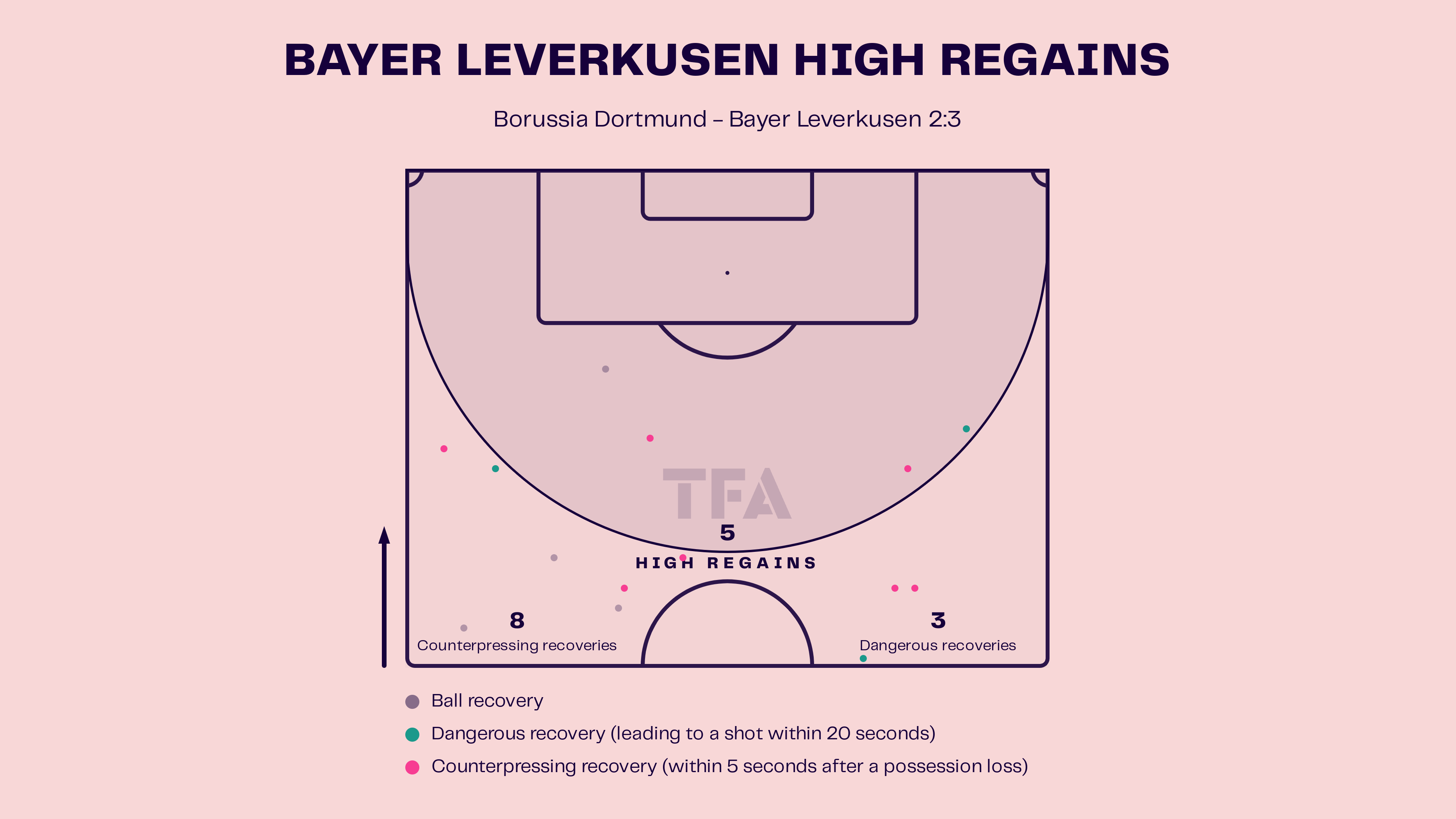

Bayer Leverkusen kicked off 2025 with a statement 2-3 win against Borussia Dortmund at Signal Iduna Park. While the scoreline suggests a closely contested affair, Leverkusen’s tactical masterclass, particularly their relentless high press, played a pivotal role in securing a valuable point on the road. Leverkusen’s aggressive approach disrupted Dortmund’s build-up play, forced turnovers, and created numerous scoring opportunities, highlighting the effectiveness of a well-executed high press.
Early Pressure Yields Results
From the opening whistle, Leverkusen’s intentions were clear. They pressed high up the pitch, aggressively closing down Dortmund’s defenders and midfielders, denying them time and space on the ball. This relentless pressure forced Dortmund into hurried clearances and inaccurate passes, effectively disrupting their attempts to build from the back.

Leverkusen’s midfielders, led by the impressive Granit Xhaka, were instrumental in cutting off passing lanes and suffocating Dortmund’s creative outlets. Their positioning and anticipation allowed them to intercept passes and win the ball high up the pitch, creating immediate scoring opportunities.
The visitors’ early pressure paid dividends, as they capitalized on Dortmund’s mistakes to take a commanding 3-0 lead within the opening 20 minutes.
Schick’s Clinical Finishing

Leverkusen’s high press not only disrupted Dortmund’s build-up play but also created numerous goalscoring opportunities. Patrik Schick, Leverkusen’s in-form striker, was the primary beneficiary of this aggressive approach.
Schick’s first goal, a well-placed volley from close range, was a direct result of Leverkusen winning the ball high up the pitch. Dortmund’s defence, caught off guard by Leverkusen’s quick transition, was unable to react in time, allowing Schick to score with ease.
His second goal, a simple tap-in after a swift counter-attack, further highlighted Leverkusen’s ability to exploit Dortmund’s defensive vulnerabilities. The counter-attack originated from a Dortmund turnover in midfield, a direct consequence of Leverkusen’s relentless pressure.
Schick’s clinical finishing was undoubtedly a key factor in Leverkusen’s success, but his goalscoring exploits were made possible by the team’s relentless high press.
A Tactical Masterclass
Leverkusen’s tactical approach under manager Xabi Alonso deserves immense credit. Their high press, a hallmark of Alonso’s coaching philosophy, was executed to perfection.
The key to Leverkusen’s success was their coordinated and synchronized pressing. Every player understood their role and responsibilities, ensuring that Dortmund was constantly under pressure.

When Dortmund’s defenders had the ball, Leverkusen’s forwards pressed aggressively, forcing them to either play long balls or make risky passes. Their midfielders supported the press by cutting off passing lanes and closing down Dortmund’s midfielders, denying them any time or space to operate.
This coordinated pressing effectively suffocated Dortmund’s creative outlets and disrupted their attempts to build attacks from the back. Leverkusen’s high press not only yielded immediate scoring opportunities but also forced Dortmund into numerous errors, ultimately leading to their downfall.
Second-Half Adjustments
Dortmund manager Nuri Sahin attempted to counter Leverkusen’s high press by making tactical adjustments in the second half.
A dynamic and direct winger, Jamie Bynoe-Gittens stretched Leverkusen’s defence and created space for his teammates. Bynoe-Gittens’ impact was immediate, injecting much-needed energy and attacking impetus into Dortmund’s attack. His goal, a beautifully taken first-time finish, brought Dortmund back into the game and sparked a period of sustained pressure.
However, Leverkusen, despite conceding a goal, did not abandon their high press. They continued to press aggressively, albeit with slightly more caution, ensuring that Dortmund’s build-up play remained disrupted.
Late Drama Fails to Secure Victory
Despite their second-half adjustments and a late penalty, Dortmund failed to find an equaliser. While they enjoyed more possession and created several scoring opportunities in the latter stages of the match, Leverkusen’s resolute defence and the continued high press made it difficult for Dortmund to break through.
Leverkusen defended valiantly, repelling Dortmund’s attacks with disciplined organization and last-ditch tackles. Their ability to maintain their defensive shape and continue pressing high up the pitch, even with a numerical disadvantage, was a testament to their tactical discipline and fitness levels.
Key Takeaways

Leverkusen’s 2-3 win against Dortmund showcased the effectiveness of a well-executed high press. Their aggressive approach disrupted Dortmund’s build-up play, forced turnovers, and created numerous scoring opportunities.
This match highlighted several key aspects of Leverkusen’s high press:
- Coordinated and Synchronized Pressing: Every Leverkusen player understood their role and responsibilities, ensuring that Dortmund was constantly under pressure.
- Aggressive Forward Pressing: Leverkusen’s forwards relentlessly closed down Dortmund’s defenders, forcing them into hurried clearances or risky passes.
- Midfield Support: Leverkusen’s midfielders effectively cut off passing lanes and closed down Dortmund’s midfielders, denying them any time or space to operate.
Leverkusen’s performance served as a tactical masterclass, demonstrating how a well-executed high press can disrupt even the most potent attacking sides. Their victory was a testament to their tactical discipline, fitness levels, and the effectiveness of their manager’s game plan.
Visuals via TFA data viz engine